When educators talk about student success, it’s easy to focus on grades, test scores, or graduation rates. But behind every success story is a network of people working together to help students overcome challenges and discover their potential.
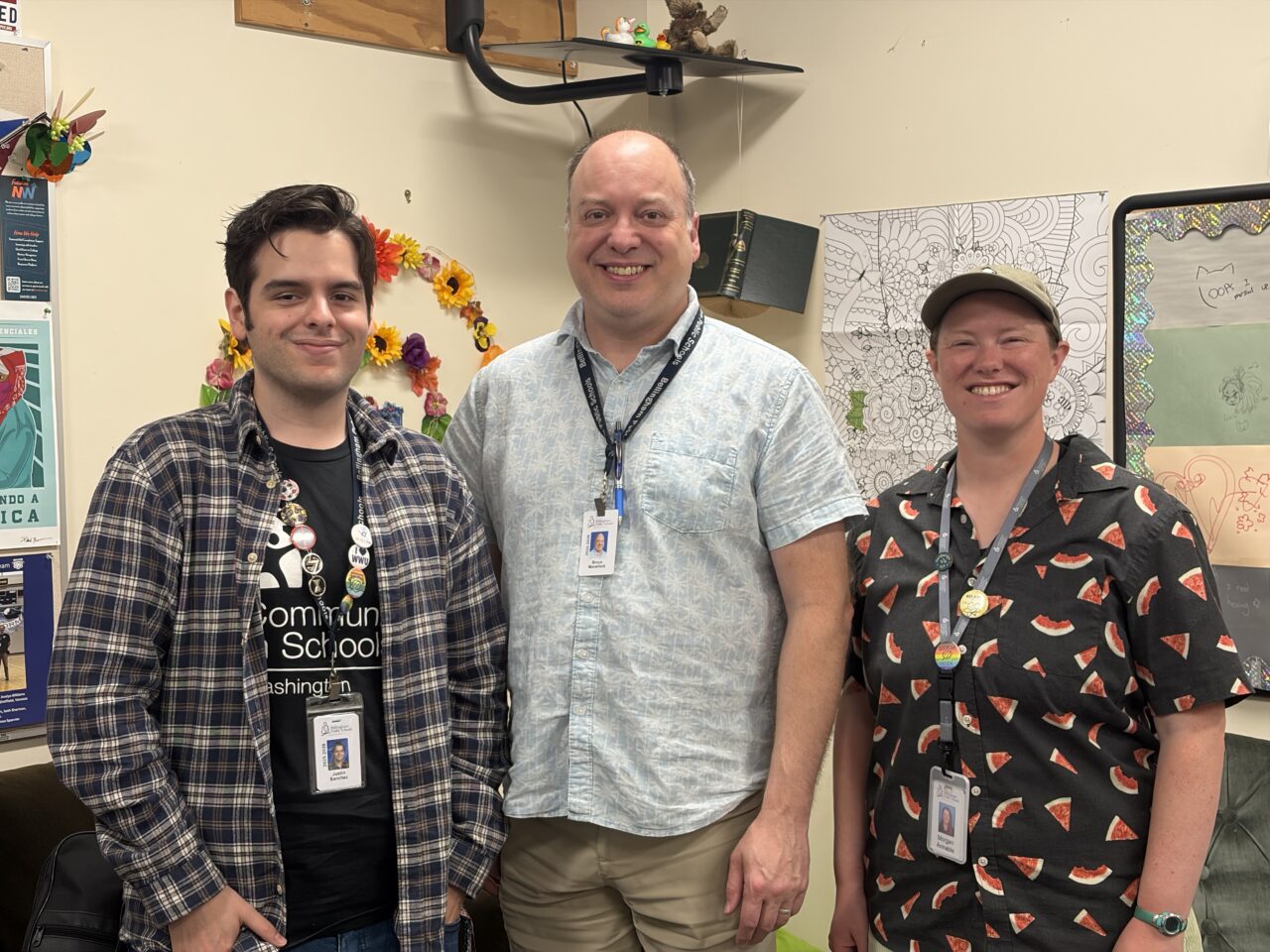
For Squalicum High School teacher and instructional coach Bruce Mansfield and Communities In Schools (CIS) Site Coordinator Justin, one student’s journey demonstrates what can happen when schools prioritize relationships, flexibility, and collaboration.
Building a Support System
Bruce Mansfield has spent more than 23 years in education, all within Bellingham Public Schools. In addition to serving as an instructional coach at Squalicum High School, he teaches future educators at Western Washington University and is passionate about creating systems that help both teachers and students thrive.
Justin came to Communities In Schools after student teaching and working throughout Whatcom and Skagit County schools. Now in his second year as a CIS Site Coordinator, he supports students by helping remove barriers to success and connecting them with the resources they need.
Together, they became part of a team supporting a student we’ll call Christian.
When Christian entered Bruce’s U.S. History classroom, he was attending school consistently but struggling to engage. He rarely spoke in class, avoided participating in discussions, and often appeared disconnected from assignments.
“He was coming every day, but he wouldn’t talk to anyone,” Bruce recalls.
Rather than viewing the challenge as something to solve alone, Bruce immediately began reaching out to others in the school community. He connected with counselors, multilingual specialists, and Justin through Communities In Schools.
“As an experienced teacher, I’ve learned to go outside of my classroom as much as possible,” Bruce said. “We all see different pieces of a student’s story.”
Finding What Worked
As the team learned more about Christian’s background, they discovered that his challenges extended beyond a single class.
He had experienced interruptions in his education and faced significant reading and writing barriers. Many of the routines and expectations of the American school system were unfamiliar to him. While he was intelligent and capable, traditional instructional approaches were not meeting his needs.
Instead of lowering expectations, the team focused on changing the pathway to success.
“We have firm goals for every kid,” Bruce explained. “We can employ flexible means.”
Every Monday, Bruce and Justin met to discuss upcoming lessons and assignments. Every Tuesday, Justin worked directly with Christian, helping him navigate classroom tasks and develop strategies that matched the way he learned.
Together, they modified readings, created sentence frames, developed graphic organizers, and experimented with different note-taking methods.
One breakthrough came through the use of sticky notes.
Christian began recording his thoughts on sticky notes while reading adapted texts. Those notes were then moved into graphic organizers and eventually used to support written responses. What started as a simple accommodation became a powerful tool for helping him organize information and build confidence in his own thinking.
“It became important for us to better understand Christian as a person and figure out what methods were going to work for him,” Justin said.
Growth Through Trust and Persistence
Bruce’s classroom is built around a growth-based philosophy. Instead of focusing solely on grades, students collect evidence of learning and reflect on their growth over time.
“Anything students make, we count as evidence of learning,” Bruce said.
The approach gives students permission to struggle, make mistakes, and improve.
“A growth-based system gave students permission to not get it right away,” Justin said. “That opened the door to eventually getting it right.”
Over time, Christian began taking greater ownership of his learning. The supports that once required significant adult assistance became tools he could use independently.
By the end of the year, he was reading, taking notes, organizing information, and completing complex thinking tasks with far less support than before.
His greatest growth came in reading and writing, but perhaps more importantly, he began to see himself differently.
“He now sees himself as a successful person in his own capacity,” Bruce said.
A Team Effort
Christian’s success did not happen because of one teacher, one intervention, or one program.
It happened because a network of adults worked together to support him.
Justin believes that’s one of the most important lessons for both educators and students.
“Rely on your network of support staff,” he says. “You’re part of a team.”
That philosophy continues to guide his work today. As a Site Coordinator, Justin collaborates closely with teachers, counselors, administrators, and families to ensure students receive support where and when they need it.
“A lot of my work has become more collaborative,” Justin said. “It’s about meeting students where they are and working together to help them move forward.”
Looking Ahead
Christian is graduating from Squalicum High School this June.
The path wasn’t always clear. At times, his graduation seemed uncertain. But through persistence, individualized support, and a team of adults who believed in his potential, he found his way forward.
“He was so determined and so willing to put in the work,” Justin said.
For Bruce, Christian’s story reinforces a lesson he has learned throughout his career.
“Find the right environment,” he said, “and kids will want to be better.”
At Communities In Schools, we know that every student’s journey is different. When schools, families, and community partners work together, students don’t just overcome barriers—they discover what they’re capable of achieving.
And sometimes, that makes all the difference.